Why Are More Steam Generators Using Induction Heating?
In modern industrial and civilian heating applications, steam generators are widely used as efficient thermal energy conversion equipment in industries such as food processing, chemical production, medical care, laundry, and aquaculture. With the continuous improvement of national requirements for energy efficiency and environmental protection, traditional coal-fired, gas-fired, and oil-fired steam generators are facing challenges such as high energy consumption, heavy pollution, and safety risks.
To address these issues, induction heating technology has been introduced into steam generators and has quickly gained market attention. So, why are more and more steam generator systems adopting induction heating? What technical advantages does induction heating offer compared with traditional heating methods? In the following sections, we will explore these questions in detail.
1. Introduction to the Principles of Induction Heating
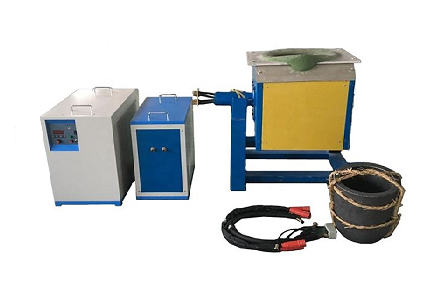
Induction heating is a heating method based on the principle of electromagnetic induction, in which metal is heated by the eddy currents generated within it. An induction heating system mainly consists of an induction heating power supply and an induction coil.
When alternating current flows through the induction coil, it generates a rapidly changing magnetic field. This magnetic field induces eddy currents within the metal heating element, causing the metal itself to generate heat. Since energy is transferred to the metal through electromagnetic induction without direct physical contact, induction heating can achieve rapid and efficient heating.
2. Analysis of the Advantages of Induction Heating for Steam Generators
1). High Thermal Efficiency and Energy Savings
The thermal efficiency of induction heating can reach more than 95%, while traditional resistance heating generally has an efficiency of around 70%. Because induction heating directly heats the metal heating element through electromagnetic induction, energy loss is significantly reduced and the temperature rises more quickly. This can greatly shorten the time required for steam generation and reduce energy consumption costs by more than 30% during long-term operation.
2). Uniform Heating and Precise Temperature Control
During the induction heating process, heat is generated directly within the heating element, resulting in a more uniform heat distribution and reducing the risk of localized overheating. This helps minimize problems such as boiler scaling and pipeline damage.
When combined with an intelligent temperature control system, induction steam generators can achieve temperature control accuracy of ±1°C, meeting the different requirements of various processes for steam temperature and pressure.
3). High Safety and Easy Operation
Induction heating does not use an open flame, eliminating the flammable and explosive hazards associated with traditional fuel-fired heating and reducing fire safety risks. The steam generator is also equipped with multiple safety protection functions, such as over-temperature protection, water shortage alarms, and automatic power-off, ensuring safe and reliable operation.
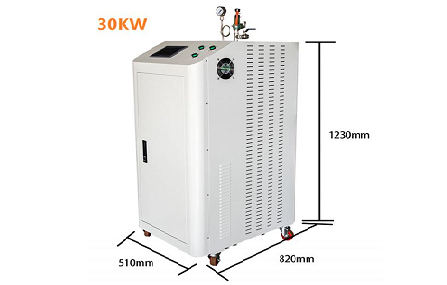
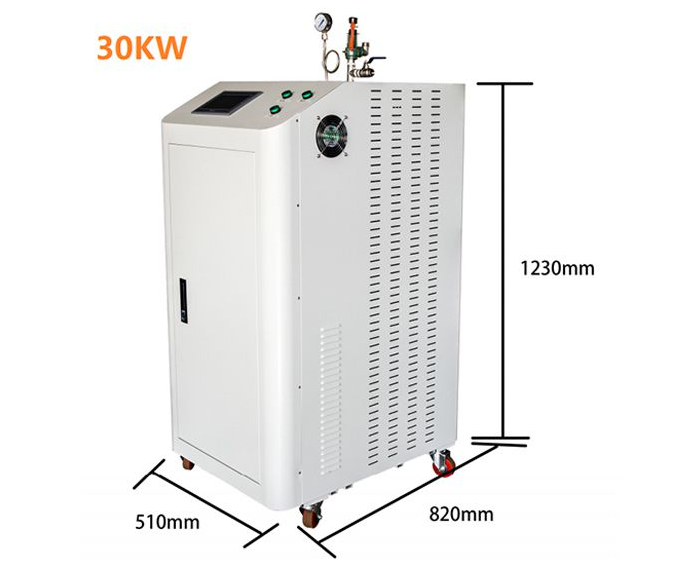
In addition, the equipment starts up quickly and does not require a long warm-up period. With a 7.0-inch large touch screen, the system is easy to operate and suitable for different types of users.
4). Long Service Life and Low Maintenance Costs
The induction heating system has no mechanical moving parts and uses non-contact heating, helping avoid problems such as oxidation and burnout commonly associated with traditional electric heating tubes.
The heating elements are generally made of stainless steel or alloy materials, providing good corrosion resistance and high-temperature resistance. Their service life can be 2–3 times longer than that of traditional electric heating tubes.
At the same time, the system has a relatively simple structure and requires minimal daily maintenance, helping significantly reduce equipment maintenance costs.
5). High-Level Intelligence and Convenient System Integration
Modern induction steam generators are generally equipped with digital control systems that support functions such as remote monitoring, data acquisition, automatic start and stop, and timed operation, meeting the requirements of industrial automation.
Some high-end systems can also be connected to PLC systems to enable linkage control with production lines, helping improve overall production efficiency and supporting the integration of steam generation into automated production processes.
3. Summary
In summary, induction heating technology has become an important direction for the development and upgrading of modern steam generators due to its advantages of high efficiency, energy savings, uniform heating, safety, environmental performance, and intelligent control.
It can not only significantly improve the overall performance and user experience of steam generator equipment but also supports the broader goals of energy conservation and emission reduction. With the continued development of clean electricity and intelligent manufacturing, the application prospects of induction heating technology in steam generators across various industries are expected to become increasingly broad.