The world of precious metals is both fascinating and highly specialized, where transforming raw materials into valuable products is considered an art as much as a science. One of the most critical stages in this process is smelting—the extraction of precious metals from their ores. This leads to a key question: What is the best method for smelting precious metals? The answer can be summarized in two words: induction furnaces.
Induction furnaces have become the preferred solution for precious metal smelting due to their distinct advantages and advanced technical capabilities. In this article, we explore why induction furnaces are so widely adopted for smelting precious metals, the types of materials they can process, their practical applications, and the technical features that make them the optimal choice for this essential operation.
1. Understanding Induction Furnaces
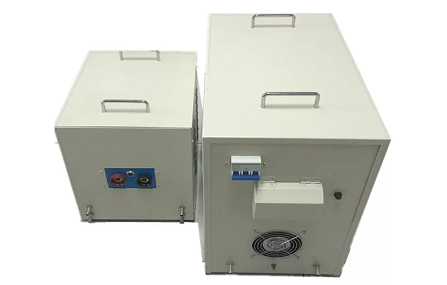
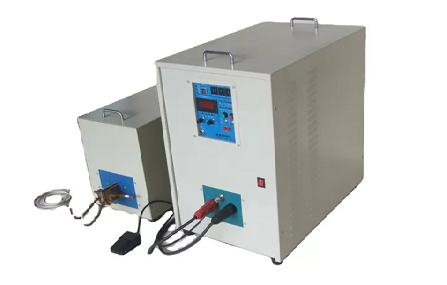
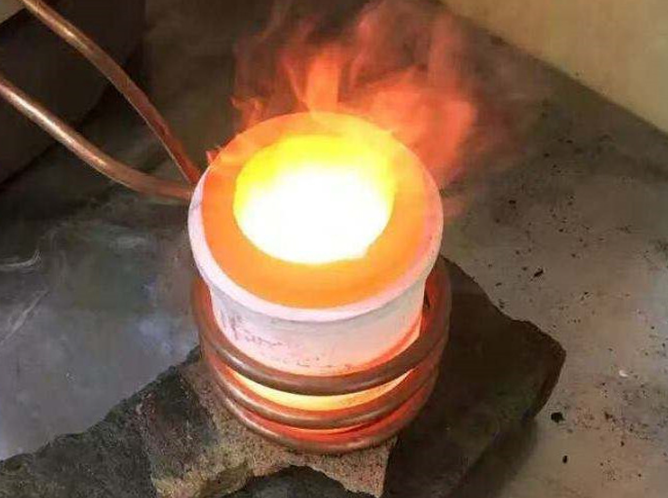
Induction furnaces are advanced metallurgical systems that use electromagnetic induction to generate heat directly within conductive materials, including precious metals such as gold, silver, platinum, and others. A typical induction furnace consists of a crucible that contains the metal to be melted and an induction coil that produces a rapidly changing magnetic field.
This magnetic field induces electric currents within the conductive metal, causing resistive heating and a rapid increase in temperature. As a result, the metal inside the crucible melts in a controlled manner, allowing impurities to separate effectively and enabling the production of high-quality, refined precious metals.
Induction furnaces play a vital role in the smelting process and are an essential part of modern precious metal melting equipment. Their ability to efficiently separate impurities from valuable metals ensures a consistently high level of purity in the final product.
2. Induction Furnaces: A Unique Smelting Solution
Smelting is a transformative process that uses heat to extract and refine precious metals from their ores. Induction furnaces have modernized this long-established technique by introducing an efficient and technologically advanced approach.
The uniqueness of induction furnaces lies in their use of electromagnetic principles. Unlike traditional smelting methods that rely on direct flames or open heat sources, induction furnaces generate heat through electromagnetic fields. This fundamental difference provides several advantages that make them the preferred solution for precious metal smelting:
· High efficiency: Induction furnaces can achieve extremely high temperatures, enabling efficient smelting. Their rapid heating and cooling capabilities help minimize energy loss and material waste.
· Precise temperature control: These systems allow accurate temperature regulation, ensuring consistent smelting results and reducing metal loss.
· Environmentally friendly operation: Induction furnaces do not rely on fossil fuel combustion, resulting in a significantly lower carbon footprint than conventional smelting methods.
· Wide material applicability: They are suitable for smelting a broad range of precious metals, including gold, silver, ruthenium, platinum, iridium, rhodium, and osmium, making them valuable across many industries.
· Process precision: Compared with traditional furnaces, induction furnaces offer superior control over the melting process, helping maintain metal purity and overall product quality.
· Enhanced safety: The absence of direct contact with open heat sources creates a safer working environment for operators.
· Durability and low maintenance: With few moving components, induction furnaces are highly durable and require less maintenance, reducing long-term operational costs.
· Cost-effectiveness: Their high energy efficiency translates into lower energy consumption and cost savings over time.
3. Types of Materials That Can Be Smelted
Induction furnaces demonstrate exceptional versatility in smelting a wide range of precious metals, including:
· Gold: Gold smelting is a critical process in both the jewelry and electronics industries. The precise temperature control offered by induction furnaces ensures high purity and consistent quality in the final gold product.
· Silver: Smelting silver requires a carefully controlled environment to minimize oxidation and impurity absorption. Induction furnaces provide a clean and stable heating environment, resulting in high-grade silver output.
· Platinum Group Metals (PGMs): Induction furnaces are the preferred solution for smelting PGMs such as platinum, iridium, rhodium, and osmium. These metals are widely used in applications including catalysts and medical equipment due to their distinctive physical and chemical properties.
4. Applications of Induction Furnaces for Smelting Precious Metals
· Jewelry Industry: Induction furnaces are widely used for smelting gold and silver in jewelry manufacturing. Their precise temperature control ensures high purity, helping preserve and enhance the value of the precious metals.
· Electronics and Electrical Industries: Precious metals such as gold and silver are essential in electronic components, requiring reliable and consistent smelting processes. Induction furnaces provide the efficiency and control needed to meet these industry demands.
· Refining and Recycling: Induction furnaces play an important role in refining and recycling precious metals by reducing material loss and improving resource efficiency.
5. Advantages Over Other Techniques
Induction furnace crucibles are typically made from specialized materials such as graphite and ceramics, which can withstand extremely high temperatures and aggressive chemical reactions. These crucibles play a critical role in preserving the purity of molten precious metals. In addition, induction furnaces operate in a controlled environment with low oxygen levels, which helps prevent oxidation during the smelting process—an essential requirement for applications demanding ultra-high metal purity.
The key advantages of using induction furnaces for smelting precious metals can be summarized as follows:
· Superior melt quality: Induction heating provides precise metallurgical control, resulting in higher-quality melts.
· Extended furnace lifespan: Compared with fuel-fired furnaces, induction furnaces generally offer longer service life, reducing maintenance and replacement costs.
· Rapid heating rates: Fast heating shortens processing time and improves overall productivity.
· Uniform heating: Electromagnetic induction ensures even temperature distribution, preventing localized overheating and uneven mixing.
· Lower energy consumption: High energy efficiency reduces overall power usage, translating into long-term cost savings.
Conclusion
Induction furnaces have proven to be a transformative technology in the smelting of precious metals. With advanced operating principles, high energy efficiency, precise temperature control, and reduced risk of metal contamination, they offer clear advantages over traditional melting methods. Their ability to process a wide range of precious metals across multiple applications makes them indispensable in industries such as jewelry manufacturing, electronics, and metal refining. By utilizing electromagnetic induction, these furnaces provide a clean and environmentally responsible solution while consistently delivering high-quality, refined precious metals that meet the demands of modern production.
In an era where sustainability and efficiency are increasingly critical, induction furnaces represent a technology that successfully combines performance, quality, and environmental responsibility. The question is no longer “Why use induction furnaces?” but rather “Why continue relying on outdated methods?” With these considerations in mind, upgrading precious metal melting equipment to induction furnaces is a practical step toward a more efficient, productive, and future-ready smelting process.