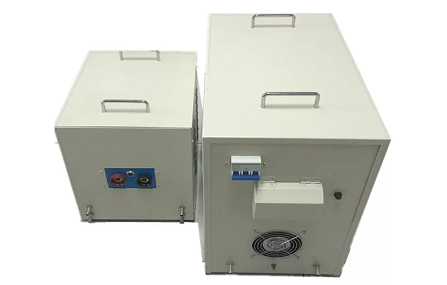
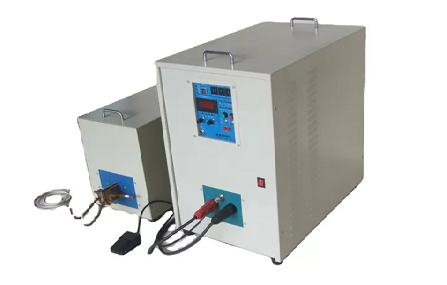
In modern manufacturing, brazing is a critical process for joining metal components efficiently and reliably. Among the many techniques available, induction brazing and vacuum brazing are two widely used methods, each with unique advantages, limitations, and ideal applications. Understanding how these methods differ helps engineers and production managers make informed choices that improve quality, reduce costs, and optimize workflow.
Introduction to Induction Brazing
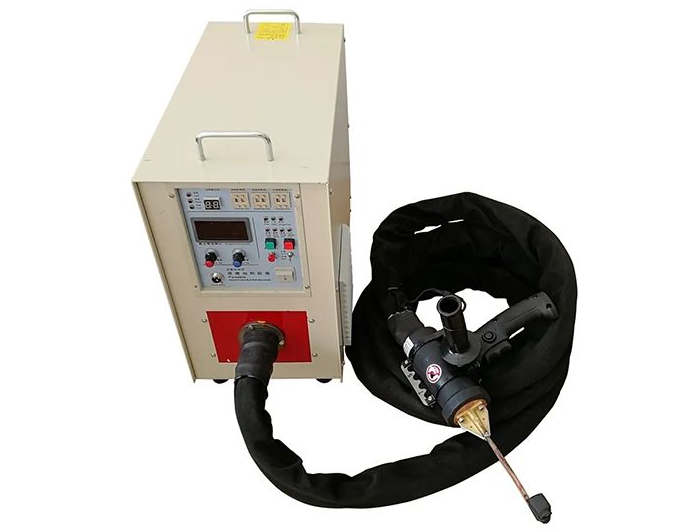
Induction brazing uses electromagnetic fields to heat metal parts locally. A copper coil, usually water-cooled, carries a rapidly alternating electrical current, generating an electromagnetic field. This field penetrates the part, inducing heat directly in the metal, rather than applying heat from the outside. The result is a highly localized heating effect, much like how a microwave heats food from the inside rather than through external convection.
This localized heating makes induction brazing ideal when:
1. Only a small area requires brazing, and heating the entire component is unnecessary or wasteful.
2. Portions of the component are sensitive to high heat and could be damaged if exposed.
3. The part is too large to fit into a conventional furnace.
Induction brazing offers speed and efficiency, often heating joints in seconds or minutes. Additionally, because only the joint area is heated, the rest of the assembly remains cool, reducing thermal distortion and potential damage.
How Induction Heating Works
The principle of induction brazing relies on the interaction between electricity and magnetism. When current flows through the copper coil, an electromagnetic field is created around it. If a ferrous metal, like steel, is placed inside the coil, the field interacts with the metal’s magnetic domains, causing them to realign with the changing polarity of the electromagnetic field. As the current alternates thousands of times per second, the constant realignment generates frictional heat within the metal itself.
The right-hand rule helps visualize this: the thumb represents the direction of electrical current, while the fingers indicate the flow of the electromagnetic field. By positioning the workpiece properly within the coil, manufacturers can achieve precise heating patterns. Coil design, including the number of loops, spacing, and geometry, is critical. Improper coil spacing can create uneven heating, known as a “barber-pole” effect, which reduces brazing quality.
Material Considerations
Not all metals heat equally under induction. Metals with low thermal conductivity, like steel, heat quickly, while highly conductive metals, such as copper and aluminum, require significantly more energy to achieve brazing temperatures. This is because high conductivity metals dissipate heat quickly, making localized induction heating less effective. Manufacturers must account for these material properties when designing induction brazing setups.
Advantages and Limitations of Induction Brazing
Advantages:
· Fast heating and short cycle times
· Localized heating reduces energy consumption
· Minimizes thermal damage to sensitive areas
· Flexible for large or irregularly shaped components
Limitations:
· May require flux to prevent oxidation in open-air applications
· Less effective for high-conductivity metals
· Equipment and coil design can be complex for certain parts
Introduction to Vacuum Brazing
Vacuum brazing is a furnace-based process conducted in a controlled vacuum environment, which eliminates air and other atmospheric gases. This prevents oxidation and produces extremely clean, high-quality joints. The process involves heating the entire assembly uniformly, often with carefully controlled temperature ramps and cooling rates.
Key advantages of vacuum brazing:
· Oxidation-free joints with no need for flux
· Strong, corrosion-resistant connections
· Consistent results across complex assemblies
· Suitable for critical applications, including aerospace, medical, and high-performance industrial components
The controlled environment ensures precise temperature management, reducing the risk of thermal distortion and improving mechanical integrity. However, vacuum furnaces are more expensive and have longer cycle times than induction systems, which may impact production efficiency for high-volume or fast-turn applications.
Comparing Induction and Vacuum Brazing
| Feature | Induction Brazing | Vacuum Brazing |
|---|
| Heat Application | Localized, targeted | Entire assembly in furnace |
| Speed | Seconds to minutes | Longer, controlled cycles |
| Atmosphere | Air or controlled gas | Vacuum (no oxygen) |
| Flux Requirement | Often required | Not required |
| Joint Quality | Good for targeted areas | Extremely clean and strong |
| Equipment Cost | Moderate | High (vacuum furnace required) |
| Material Flexibility | Works best for low-conductivity metals | Broad material compatibility |
Induction brazing excels in speed and efficiency for targeted joints, while vacuum brazing delivers superior joint quality and uniformity, critical for sensitive or high-precision parts.
Practical Considerations
When choosing a brazing method, several factors must be considered:
1. Production Volume: High-volume manufacturing may favor induction brazing for its rapid cycle times.
2. Joint Criticality: Applications demanding maximum strength and cleanliness typically use vacuum brazing.
3. Part Size and Geometry: Large or complex parts that cannot fit into a furnace benefit from induction brazing.
4. Material Type: Conductivity and magnetic properties of the material affect the feasibility of induction heating.
Many companies combine both methods, using induction brazing for secondary parts or localized assemblies, and vacuum brazing for high-value, critical components. This hybrid approach can optimize cost, speed, and quality across the production line.
Conclusion
Both induction and vacuum brazing are powerful tools in modern manufacturing. Induction brazing provides speed, energy efficiency, and localized heating, while vacuum brazing ensures clean, high-integrity joints suitable for critical applications. Understanding their principles, advantages, and limitations allows engineers to make informed choices that balance cost, quality, and production efficiency.
By carefully considering material properties, joint requirements, and production needs, manufacturers can select the appropriate brazing technique and achieve optimal results. Whether your goal is rapid assembly or maximum performance, mastering these methods ensures stronger, more reliable metal joints.