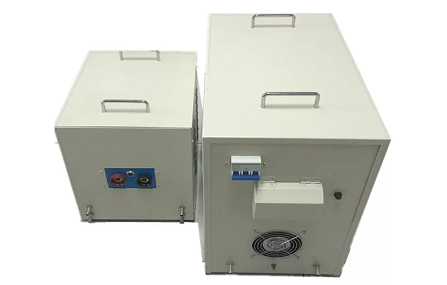
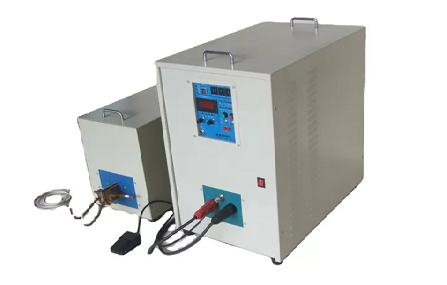
In modern manufacturing, achieving high‑quality, repeatable metal joints is often plagued by problems like uneven heat, oxidation, slow production cycles, distortions, and safety hazards. This is where induction brazing — using dedicated induction brazing machines — emerges as the ultimate solution. Compared to traditional brazing methods (torch brazing, furnace brazing), induction brazing machines bring a new level of precision, speed, and reliability.
What Is Induction Brazing
Induction brazing is a process where metal parts are joined using a filler metal (whose melting point is lower than the base metals), heated by electromagnetic induction rather than by open flame or full‑furnace heating. The induction coil generates a magnetic field that induces eddy currents inside the workpiece. Those currents convert directly into heat — localized at exactly the joint interface — melting the filler so it flows by capillary action and bonds the parts together. Meanwhile, the base metals stay solid, preserving their structural integrity.
Because the heating is so localized and controllable, induction brazing can join similar or dissimilar metals — from copper and brass to steel or aluminum — making it suitable for a wide range of applications: HVAC, automotive, electronics, aerospace, tooling, and more.
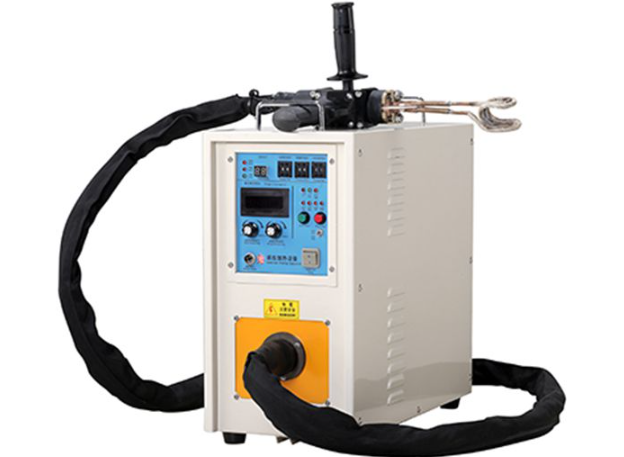
Why Induction Brazing Machines Solve Common Brazing Problems
Here is how induction brazing machines address and often eliminate the typical drawbacks associated with conventional brazing methods:
• Rapid Heating & High Productivity
Because induction heating applies energy directly into the workpiece, warming only the joint interface — not the entire part — the heating cycle is much faster than furnace brazing or torch brazing. That leads to significantly reduced cycle times and much higher throughput.
Particularly in production environments (mass manufacturing or repetitive brazing tasks), this speed translates into increased output and lower per‑part cost.
• Precise, Controlled & Localized Heating — Minimizes Distortion & Material Damage
One of the major challenges in brazing is overheating surrounding areas, causing warping, distortion, or undesirable metallurgical changes (like tempering or annealing). Induction brazing mitigates this by delivering heat only where it's needed.
This selectivity ensures that only the joint gets hot — the rest of the assembly remains at safe temperature — preserving the integrity, tolerance, and mechanical properties of the base materials.
• Clean, High‑Quality, Leak‑Free Joints with Less Oxidation & Post‑Cleaning
Because induction brazing can be done under protective atmospheres (e.g. inert gas) and heats only joint zones rapidly, oxidation, scaling, and carbon build-up — typical with flame or furnace brazing — are greatly reduced.
As a result, the brazed joints are usually clean and often require minimal or no post‑brazing cleaning or grinding. That not only saves labor and time, but improves final product appearance and integrity, which is especially important in high‑precision or aesthetic applications.
• Consistency, Repeatability & Automation — Ideal for Mass Production
Unlike torch brazing — which often depends heavily on operator skill, flame settings, or environmental conditions — induction brazing machines rely on programmable parameters: power, frequency, coil geometry, timing. Once a “recipe” is established, the same joint quality can be reproduced every run with minimal variation.
Moreover, induction systems can be integrated into automated production lines (with conveyors, robotics, PLC controls), which is perfect for high‑volume manufacturing while guaranteeing uniform quality.
• Energy Efficiency, Lower Costs & Environmental / Workplace Safety
Because induction heating delivers energy directly to the metal and avoids heating large volumes of air or furnace chambers, it's far more energy‑efficient — reducing power use and operating costs.
In addition, induction brazing removes the need for open flames, combustible gases or fuel bottles — greatly lowering fire risk, improving safety, and creating a cleaner, more comfortable workplace.
In What Situations Induction Brazing Is a "Must‑Have"
Given these advantages, induction brazing machines become particularly attractive/necessary when:
You have medium or high volume manufacturing runs — where throughput, consistency, and repeatability matter most.
The parts are complex assemblies or precise components — where heat distortion, metallurgical integrity, or clean appearance is critical.
You work with dissimilar metals or heat‑sensitive components.
You care about energy consumption, operational costs, workplace safety, or environmental impact.
Your production process benefits from automation, lean manufacturing, and tight quality control.
Why Induction Brazing Machines Are the "Ultimate" Solution
In sum, induction brazing machines combine speed, precision, quality, repeatability, energy efficiency, and safety — addressing nearly all major pain points that plague traditional brazing methods. For any serious manufacturing operation aiming for high quality and efficiency, induction brazing is not just a nice-to-have — it’s a strategic investment that delivers consistent value.
Compared with torch or furnace brazing — with their drawbacks of uneven heating, slow cycles, oxidation, operator variability, and safety hazards — induction brazing stands out as the superior, modern solution.
Final Thoughts
As industries evolve toward lean manufacturing, automation, and high output with tight tolerances, traditional brazing methods increasingly fall short. Induction brazing machines answer this evolution head-on — enabling cleaner, faster, more reliable brazing.
If you're evaluating metal-joining methods for precision assemblies, mass production, or mixed‑metal applications — induction brazing deserves serious consideration. It represents the future of industrial brazing: efficient, safe, precise, and scalable.