How Do Electric Boilers/Heaters Work?
For many years, most UK households have relied on gas boilers for heating and hot water.
However, this is expected to change as the UK moves toward its goal of becoming carbon neutral (net-zero) by 2050. As a result, there is increasing pressure to reduce the use of gas boilers in the coming years.
In addition, over 2 million households in the UK do not have access to the mains gas network. Many other properties are also unable to use gas due to flue restrictions in older or listed buildings.
Because of these factors, electric boilers and heaters are becoming a popular and growing alternative to gas heating systems.
But how do they actually work?
How Do Electric Boilers Work?
Like a traditional gas combi boiler, an electric boiler is supplied with cold water from the mains water system.
Electricity from the mains supply is used to power a heating element inside the boiler. In simple terms, they work like a large electric kettle, using electricity and a metal heating element to heat water.
Cold water passes over the heating element, where heat is transferred to the water. This produces hot water that can then be delivered to radiators and taps on demand, or stored in a hot water cylinder for later use.
The exact heating and storage process depends on the specific type of electric boiler or heater being used.
Types of Electric Boilers
Electric boilers are highly efficient, with many models achieving up to 100% efficiency, while gas boilers typically do not exceed around 90%. They also do not produce direct carbon emissions during operation, making them a cleaner alternative to traditional heating systems.
However, there are several types of electric boilers, and the most suitable option depends on factors such as hot water demand, property size, and mains water pressure.
Electric Combi Boilers
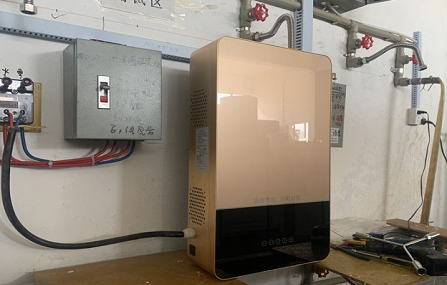
An electric combi boiler (combination boiler) provides both heating and hot water from a single unit. It uses an internal heating element and a design that increases the surface area so more cold water can be heated as it flows through the system.
These boilers are usually wall-mounted and are best suited for small properties or homes with low to moderate hot water demand. They are also generally the quickest and most cost-effective type to install.
The main limitation of electric combi boilers is that they do not include a hot water storage tank. This means you cannot benefit from off-peak energy tariffs such as Economy 7 by storing heated water overnight. They may also struggle to meet higher hot water demands in larger households with multiple outlets.
Electric Storage Boilers
An electric storage boiler uses an electric flow system to heat water and stores it in a built-in hot water cylinder.
The main advantage is that water can be heated during off-peak hours, allowing users to take advantage of lower electricity rates. For example, households on Economy 7 tariffs can schedule heating during cheaper night-time periods, helping reduce energy costs.
However, storage boilers are generally more expensive to purchase and install, and they require more physical space compared to combi systems.
Dry Core Storage Boilers
Dry core storage boilers operate similarly to traditional storage boilers by using off-peak electricity. However, instead of storing hot water directly, they store heat in a solid medium such as bricks.
This stored heat is then released when needed to warm water for central heating or domestic hot water use.
Dry core systems are considered more flexible than standard storage boilers because heat is released on demand. This makes them a good option for homeowners looking to optimize energy use under tariffs like Economy 7.
Electric CPSU Boilers
A Combined Primary Storage Unit (CPSU) is a type of electric boiler designed to store a large volume of hot water. This allows it to deliver hot water to radiators and taps at a high flow rate, making it suitable for buildings with high hot water demand.
CPSU systems can be used in residential properties, but they are more commonly installed in commercial buildings. They are large units that require significant installation space and are generally more expensive than standard boilers.
Pair Electric Boilers with Solar
If you have a hot water storage cylinder with an immersion heater (also known as a megaflow system), it can be connected to a solar PV system. This allows you to heat water during the daytime using solar energy, effectively reducing running costs.
What Size Boiler Do You Need?
Boiler size refers to power output rather than physical dimensions, and is measured in kilowatts (kW). In general, a higher kW rating means the boiler can supply hot water to more outlets at the same time.
Electric boilers are typically available in sizes ranging from 5 kW to 15 kW. The correct size depends on your property size and heating requirements.
A common guideline is to allow around 1.5 kW per radiator in your home. However, other factors such as mains water pressure, ceiling height, and insulation levels also affect the required output. For this reason, it is recommended that a qualified engineer assesses your property’s heating needs.
It is important to choose the correct boiler size. A smaller unit may not provide enough hot water, while an oversized boiler can lead to higher running costs and wasted energy.