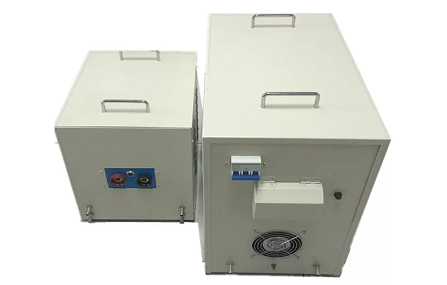
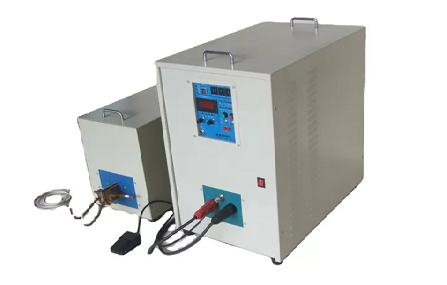
High frequency induction heating is a fast, clean, and highly controllable method for heating conductive materials, especially metals. Unlike flame heating, furnace heating, or contact heaters, induction heating does not rely on direct contact between the heat source and the workpiece. Instead, heat is generated inside the metal itself through electromagnetic induction. This is why high frequency induction heating is widely used in metal insert heating, brazing, annealing, hardening, shrink fitting, soldering, and automated assembly lines.
In simple terms, high frequency induction heating uses an alternating current flowing through a coil to create a rapidly changing magnetic field. When a conductive workpiece is placed inside or near this field, electrical currents are induced within the material. These currents generate heat because of the electrical resistance of the material. High frequency induction heating heats metal in a non-contact manner by electromagnetic induction, mainly through eddy current loss and, for magnetic materials, hysteresis loss.
What Is High Frequency Induction Heating?
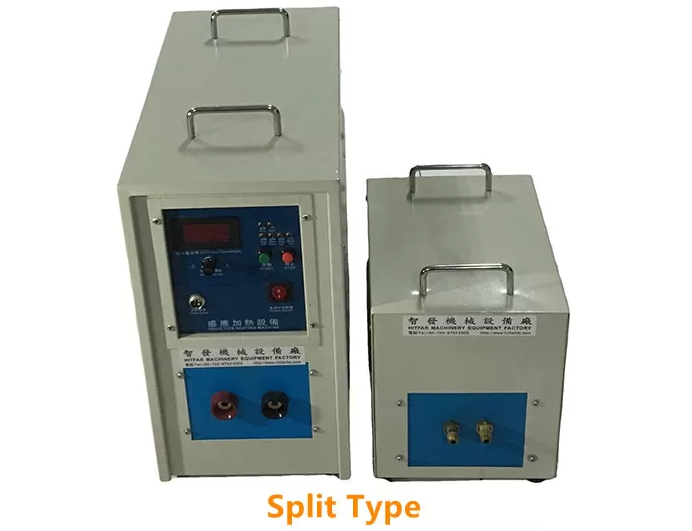
High frequency induction heating is a type of electromagnetic heating process. A typical system includes three major parts: a high frequency power generator, a matching unit or matching box, and an induction coil. The generator produces high frequency electrical power, the matching unit helps transfer energy efficiently to the coil, and the coil creates the magnetic field around the workpiece.
The workpiece does not need to touch the coil. As long as it is placed in the effective magnetic field and is electrically conductive, it can absorb energy and heat up. This makes the process especially useful for automation because the heating area can be localized, the heating time can be short, and the temperature can be controlled more precisely than many conventional heating methods.
The Basic Principle: From Coil Current to Metal Heating
The principle of high frequency induction heating can be understood in four steps.
First, alternating current flows through the induction coil. Because the current is alternating, its direction changes rapidly.
Second, this current creates an alternating magnetic field around the coil. The higher the frequency, the faster the magnetic field changes.
Third, when a conductive workpiece is placed in this changing magnetic field, eddy currents are induced inside the material. These are circulating electrical currents that flow within the body of the metal.
Fourth, because the metal has electrical resistance, the eddy currents generate heat. This is called Joule heating, or I²R heating.
This is the core reason induction heating is efficient: the heat is not transferred from an external hot surface into the workpiece; it is produced directly inside the metal.
Eddy Current Loss: The Main Heating Mechanism
Eddy current loss is the most important heating mechanism in induction heating. When the magnetic field changes, it induces electrical currents in the workpiece. These currents flow in circular paths, similar to small whirlpools, which is why they are called eddy currents.
As these currents pass through the resistance of the metal, electrical energy is converted into thermal energy. Eddy current heating can occur in both magnetic and non-magnetic conductive materials. For example, steel, stainless steel, brass, copper, and aluminum can all be heated by induction, although their heating efficiency and required power may differ.
Materials with higher electrical resistance generally convert induced currents into heat more readily. Highly conductive materials such as copper and aluminum can also be heated, but they often require careful coil design, higher power, or optimized frequency because they conduct electricity and heat very efficiently.
Hysteresis Loss: Additional Heating in Magnetic Materials
For magnetic materials such as carbon steel, hysteresis loss also contributes to heating. When a magnetic material is placed in an alternating magnetic field, its magnetic domains repeatedly realign as the field changes direction. This repeated magnetization and demagnetization consumes energy, and part of that energy becomes heat.
However, hysteresis heating only occurs in magnetic materials. Non-magnetic materials such as brass, copper, aluminum, and some stainless steels do not benefit from hysteresis loss.
It is also important to note that when steel is heated above its Curie temperature, it loses its magnetic properties. At that stage, hysteresis loss no longer contributes significantly, and eddy current heating becomes the dominant mechanism.
Skin Effect: Why Frequency Matters
One of the most important concepts in high frequency induction heating is the skin effect. In high frequency heating, induced current tends to concentrate near the surface of the workpiece rather than flowing evenly through the entire cross-section. The higher the frequency, the shallower the current penetration depth.
This means high frequency induction heating is especially suitable for surface heating, small metal parts, thin sections, and applications requiring rapid localized heating. Lower frequencies are generally used when deeper heat penetration is needed, such as large billets, thick shafts, or through-heating applications.
In practical production, choosing the right frequency is not just an electrical decision. It directly affects heating depth, heating speed, surface temperature, core temperature, and final process quality.
Key Factors That Affect Heating Performance
Several factors determine how well a high frequency induction heating process works.
Material type is one of the most important. Magnetic steel usually heats more easily than non-magnetic metals because it can benefit from both eddy current loss and hysteresis loss. Brass, copper, and aluminum can still be heated, but they may require different power levels and coil designs.
Frequency determines the depth of heating. Higher frequency creates shallower heating, while lower frequency allows deeper penetration.
Power output affects heating speed. Higher power can raise the temperature faster, but it must be controlled carefully to avoid overheating, deformation, oxidation, or inconsistent results.
Coil design is also critical. The shape, number of turns, distance from the workpiece, and cooling method of the coil all influence energy transfer efficiency. A well-designed coil focuses energy where it is needed and improves process repeatability.
Heating time and temperature control must match the process goal. For plastic insert assembly, the metal insert must become hot enough to melt the surrounding plastic locally, but not so hot that it damages the molded component. For heat treatment, the target temperature, holding time, and cooling method must be controlled according to material requirements.
Advantages of High Frequency Induction Heating
High frequency induction heating offers several advantages for modern manufacturing.
It is fast because heat is generated directly inside the workpiece. Many applications do not require long preheating time, which helps improve production efficiency.
It is clean because there is no open flame and no combustion gas. This makes it suitable for controlled production environments.
It is precise because heating can be focused on a specific area. This is useful for localized hardening, brazing joints, soldering terminals, or heating inserts before press-fitting.
It is automation-friendly because the process can be controlled by time, power, temperature feedback, or production line signals. With infrared temperature sensors or closed-loop control, manufacturers can reduce variation in pull strength, torque strength, bonding quality, or heat treatment results.
It can also reduce thermal damage. Since only the required area is heated, surrounding areas may remain cooler compared with furnace heating.
Common Applications
High frequency induction heating is widely used across industries. In automotive and electronics manufacturing, it is used to heat metal nuts, bolts, and inserts before embedding them into plastic molded parts. In metalworking, it is used for brazing, soldering, annealing, surface hardening, forging, and shrink fitting. In tool manufacturing, it can heat cutting edges or specific wear areas. In precision assembly, it can provide fast, repeatable heating for small metal components.
For manufacturers seeking stable quality and higher productivity, induction heating is often a better choice than traditional heater blocks or flame-based methods, especially when the process requires repeatability, short cycle time, and localized heating.
Conclusion
The principle of high frequency induction heating is based on electromagnetic induction. A high frequency current flows through a coil, creates a changing magnetic field, and induces eddy currents inside a conductive workpiece. These currents generate heat through electrical resistance. In magnetic materials, hysteresis loss can provide additional heating. At high frequencies, the skin effect concentrates heat near the surface, making the process ideal for fast and localized heating.
By selecting the right frequency, power, coil design, and temperature control method, high frequency induction heating can deliver efficient, clean, and repeatable results for a wide range of industrial applications. For companies looking to improve heating precision, reduce cycle time, and integrate heating into automated production lines, high frequency induction heating provides a practical and highly controllable solution.